
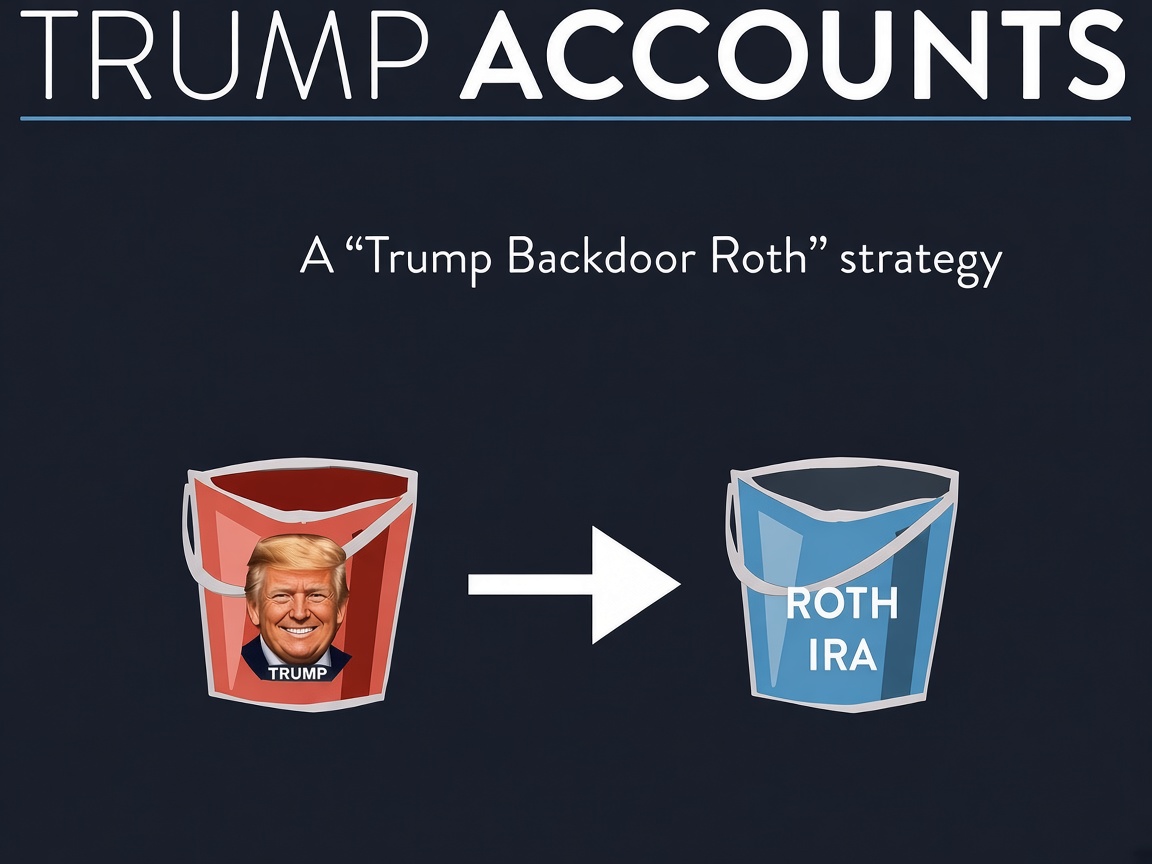
Trump Accounts give families a powerful new way to start tax-deferred investing for children. The real long-term opportunity often comes later: converting the account to a Roth IRA once the child reaches the right age and tax situation. Done well, this can lock in decades of tax-free growth. Done poorly, it can trigger an unnecessary tax bill at higher rates.
Here is a clear look at how the conversion works, the tax rules that matter, and the situations where converting makes the most sense.
Quick Background: How Trump Accounts Work
A Trump Account is a special form of traditional IRA available for eligible children under age 18. Key features during the “growth period” (through December 31 of the year the child turns 17) include:
- Annual contributions generally capped at $5,000 (2026–2027 levels; inflation adjustments begin later).
- No earned-income requirement for the child.
- After-tax contributions from family members create basis (they will not be taxed again).
- Certain contributions (the $1,000 federal pilot seed for eligible children born 2025–2028, many employer contributions under §128, and qualified general contributions) do not create basis.
- Restricted investments (primarily low-cost broad U.S. equity index funds/ETFs).
- No withdrawals allowed in most cases until the growth period ends.
On January 1 of the calendar year the beneficiary turns 18, most special rules end. The account is then treated under ordinary traditional IRA rules. At that point a Roth conversion becomes available under the normal rules of IRC §408A. There is no direct conversion from a Trump Account to a Roth IRA, the account first becomes (or is treated as) a traditional IRA.
Importantly, IRS guidance indicates that a Trump Account is not aggregated with the owner’s other IRAs for the pro-rata basis calculation on conversion. Basis tied to the Trump Account stays with it.
How the Roth Conversion Is Taxed
When you convert, the taxable amount equals the account balance minus any basis (primarily after-tax individual contributions). Earnings plus non-basis contributions (pilot seed money, certain employer money, etc.) are included in the account owner’s ordinary income in the year of conversion.
- No earned income is required to convert.
- The conversion does not count against the annual Roth IRA contribution limit.
- There is no income limit on the ability to convert.
- The account owner (the young adult) reports the taxable portion and is responsible for any tax due. Parents sometimes gift money to cover the tax bill.
Because many 18- to 24-year-olds have little or no other taxable income, a carefully timed conversion can sometimes produce little or no federal tax if the taxable amount falls within the standard deduction (approximately $16,100 for single filers in 2026).
The Critical Timing Issue: Kiddie Tax
Unearned income (including the taxable portion of a Roth conversion) of a child or young adult can be subject to the kiddie tax. Under the kiddie tax, amounts above a modest threshold are generally taxed at the parents’ marginal rates rather than the child’s.
The kiddie tax can apply until the year the individual turns 24 if they are a full-time student (or earlier if they are no longer a dependent or student). Converting at age 18 while the young adult is still subject to the kiddie tax can therefore push a large portion of the tax bill into the parents’ higher bracket. Waiting until the kiddie tax no longer applies often produces a meaningfully lower tax cost.
When Converting Makes Strong Sense
Several scenarios favor conversion:
- Low or zero other taxable income at the right age
An 18- to 23-year-old (or someone who has aged out of the kiddie tax) with little earned income can often convert a modest-to-moderate taxable balance with little or no federal tax because of the standard deduction. This is one of the cleanest “free” or near-free Roth conversions available. - Significant growth relative to basis
The longer the money has compounded inside the Trump Account, the larger the earnings portion. Converting while rates are low locks in tax-free growth on that larger balance for potentially 40+ years. Leaving it as a traditional IRA means future withdrawals (and required minimum distributions) will be taxable at whatever rates apply in retirement. - Long investment horizon and desire for tax-free flexibility
Once in a Roth IRA, qualified withdrawals are tax-free. There are also no lifetime required minimum distributions for the original owner. This is especially valuable for money that is unlikely to be needed until later in life (or that may eventually pass to heirs under more favorable Roth rules). - Parents or the young adult can comfortably pay the tax from other resources
Paying the conversion tax from non-IRA dollars preserves the full converted amount inside the Roth for growth. Gifting money to the child to cover the tax is common when the balance is large. - Partial or multi-year conversions
Spreading the conversion over two or more years can keep each year’s taxable amount inside lower brackets or under the standard deduction, especially if the young adult’s income fluctuates (college, early career, gap years).
When Waiting or Skipping Conversion May Be Better
- The young adult is still subject to the kiddie tax and parents are in a high bracket.
- The taxable portion is large relative to the standard deduction and current income, creating a meaningful tax bill the family prefers to defer.
- There is a near-term need for the funds that would trigger early-withdrawal issues or simply make the conversion tax inefficient.
- The account holds a high percentage of non-basis money and the family expects the child’s future tax rates to be lower than today’s possible conversion rates (less common for most young adults).
Practical Steps and Planning Notes
- Confirm the exact basis with the custodian before converting. Accurate basis tracking is essential.
- Model the tax cost at age 18 versus later ages (especially once kiddie tax ends).
- Coordinate with any other IRAs the young adult may open or inherit; the special non-aggregation rule for the former Trump Account is helpful but should still be verified with a tax professional.
- Remember that after conversion the usual Roth five-year rules and qualified-distribution requirements apply for tax-free earnings.
- State taxes, future law changes, and the young adult’s overall financial picture (student loans, career path, other savings) should factor into the decision.
Bottom Line
Converting a Trump Account to a Roth IRA is often one of the highest-value planning moves available with these accounts, especially when timed so the taxable portion is absorbed by the standard deduction or taxed at the young adult’s own low rate rather than the parents’ rate under the kiddie tax. The combination of after-tax contributions that create basis, years of tax-deferred growth, and the ability to convert without earned-income or income-limit barriers creates a unique “childhood backdoor Roth” opportunity.
Every family’s numbers and circumstances differ. As a result, it’s important to run the projections with current tax brackets, the actual account basis and balance, and the young adult’s expected income path before acting. Working with a tax professional or financial advisor who understands both the Trump Account rules and Roth conversion mechanics can help capture the benefit while avoiding costly timing mistakes.
About the Author
Joseph M. Favorito, CFP® is a Certified Financial Planner® as well as the founder and managing partner at Landmark Wealth Management, LLC, a fee-only SEC registered investment advisory firm. He specializes in helping individuals and families develop comprehensive financial strategies to achieve their long-term goals.